

7 Reasons a House Isn’t Selling Even When the Price Looks Right
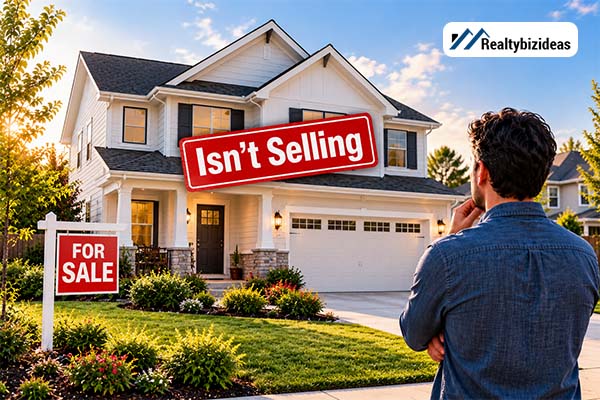
“Maybe we should lower the price.”
That was the conversation around the kitchen table for the third time that month.
The house had been on the market for weeks. The seller had checked other listings nearby, looked at recent sales, and settled on what seemed like a reasonable asking price. It wasn’t wildly higher than similar homes. If you looked at the numbers, the price seemed fair.
Still, the phone wasn’t ringing.
This is one of the frustrating things about selling a house. You can price a property reasonably and still struggle to get serious buyers interested. And sometimes, the problem has very little to do with the number on the listing.
So, what could be going wrong?
1. The House Doesn’t Make a Strong First Impression
Buyers don’t see a house the same way the seller does.
A seller sees the home they’ve lived in for years. They remember the family dinners, the improvements they’ve made, and all the work they’ve put into keeping the place in good shape.
A buyer sees what is there today.
If the lawn is overgrown, the entrance looks tired, the walls have scuff marks, or the front of the property feels neglected, a buyer may already have an opinion before they walk through the door.
That doesn’t mean you need to spend a fortune renovating everything. Sometimes, basic maintenance, better lighting, a tidy entrance, and getting rid of some clutter can make a noticeable difference.
The asking price might be reasonable. But the buyer is still thinking, “Does this house feel worth that price?”
2. The Listing Photos Are Doing the House No Favors
Think about how most people search for houses today.
They see the property online first. If the photos show dark rooms, cluttered counters, strange angles, or spaces that are difficult to understand, many buyers will simply move on.
They aren’t going to think, “The price looks good, so I’ll go and take a look anyway.”
They’ll probably scroll to the next listing.
Good property photos don’t have to make a house look perfect. They just need to show it honestly and make the rooms easy to understand.
A perfectly decent home can look small, dark, or uninviting because of poor photography.
So, even when the price makes sense, the listing may not be giving buyers enough reason to click “schedule a viewing.”
3. Something About the Location Is Turning Buyers Away
Sometimes, the house isn’t actually the problem.
Maybe it backs onto a busy road. Maybe parking is a headache. There could be construction nearby, limited public transport, or a long commute to the places people need to reach regularly.
Those things matter.
The funny thing is that sellers often stop noticing these details because they’ve lived with them for years.
A ten-minute drive to the main road might feel completely normal to the owner. Someone seeing the area for the first time might think differently.
That’s why a house can’t really be judged on the property alone. Buyers are looking at the whole package, and the location is a big part of it.
4. The House Is Competing With Better-Prepared Listings
Your house isn’t the only one a buyer is considering.
Someone looking at your property may have five other homes open on their phone, all around the same price.
One might have a newer kitchen. Another could have a bigger backyard. Another might simply be cleaner and easier to imagine living in.
That doesn’t mean your home has to beat every other property.
But you do need to understand what buyers are comparing.
If several similar homes are available, small differences can suddenly become important. Condition, presentation, location, storage, outdoor space, and even the way the listing is presented can influence which house gets the viewing.
So instead of asking only, “Is my price fair?”
It can help to ask, “What else can a buyer get for the same money?”
5. Buyers Can Sense When a Property Needs Too Much Work
A house can be priced according to its condition and still struggle to attract buyers.
Why?
Because buyers aren’t only thinking about the purchase price.
They’re thinking about what comes next.
Take a $300,000 house that needs a new roof, electrical work, new flooring, and a kitchen renovation. On paper, it’s a $300,000 house.
To the buyer, though, it can feel like a $300,000 house plus a long list of expensive jobs.
That’s especially true with older homes.
A seller might look at a repair and think, “That’s not such a big deal. We can take care of it.”
A buyer might see the same repair and think about the money, time, contractors, mess, and stress involved.
And suddenly, the asking price doesn’t feel quite as attractive anymore.
6. The Listing Description Doesn’t Answer the Questions Buyers Have
Sometimes, the problem is simply that the listing isn’t saying enough.
You might see something like:
“Beautiful three-bedroom home in a great location. Must see!”
Sounds nice, but what does it actually tell the buyer?
Is there a large backyard? Is there space for a home office? How old is the roof? Is there a garage? Has the kitchen been updated? What makes the location convenient?
These are the things buyers want to know.
A listing description doesn’t need to sound like a sales pitch. It just needs to give people enough useful information to decide whether the property is worth seeing.
If the description is vague, buyers may not have enough reason to take the next step.
7. The Seller Is Measuring the Wrong Thing
This might be the biggest issue of all.
A seller can spend weeks comparing the asking price with nearby properties and decide, “We’re priced correctly.”
But the market gives you other clues too.
If the listing is getting plenty of views but hardly any enquiries, there could be a problem with the presentation or the way the property is being positioned.
If people are coming for viewings but nobody is making an offer, they may be noticing something once they’re inside.
And if hardly anyone is showing interest at all, it may be worth looking at the whole combination of price, condition, presentation, and location.
The important thing is to look at the pattern before immediately cutting the price.
Sometimes the Price Isn’t the First Problem
When a house isn’t selling, lowering the price can feel like the easiest answer.
But before making a big change, take a step back.
Look at the photographs. Walk through the house as though you’re seeing it for the first time. Compare it honestly with other properties at the same price. Think about the things a buyer might notice, question, or worry about.
A house can be fairly priced and still not be positioned well in the market.
Selling a home isn’t just about putting a number on it and waiting for somebody to agree.
It’s about showing buyers what they’re actually getting, helping them understand the value, and giving them a reason to take the next step.
Sometimes, the answer isn’t “drop the price.”
Sometimes, it’s simply, “Look at the house through a buyer’s eyes.”
Share Your Real Estate Insights
Real estate is full of situations that look simple from the outside but can become surprisingly complicated once you’re actually dealing with them. That’s why RealtyBizIdeas welcomes practical real estate insights, experiences, and ideas that can help buyers, sellers, agents, and investors make more informed decisions.
If you have a useful perspective or an interesting real estate topic to share, explore the Real Estate Guest Post Submission opportunities and contribute an original idea to the conversation.
Most Popular Post
-

-

October 5, 2026
Is a Townhouse the Right Buy? A Practical Guide for NSW Buyers -

September 30, 2026
Xi Jinping-Named Restaurant Attacked in South Korea, Suspects Flee to China -
September 25, 2026
7 Reasons a House Isn’t Selling Even When the Price Looks Right