Why A Beautiful Home Can Still Be A Bad Investment
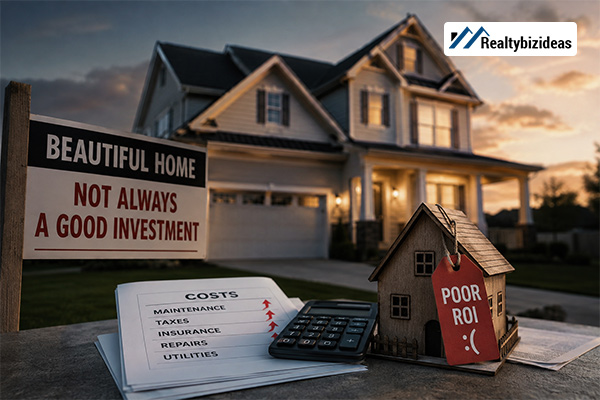
You walk into a house and immediately start imagining yourself owning it.
The kitchen looks brand new. There is fresh paint on every wall, expensive-looking flooring, a landscaped backyard, and a bathroom that looks like it belongs in a hotel. Even the neighborhood seems perfect.
Then you check the price.
It is higher than the other homes you were considering, but after seeing the property, the price doesn’t seem unreasonable.
This is exactly where real estate investors need to be careful.
A beautiful property can be a great home. But that doesn’t automatically make it a great investment.
When you’re buying a property to live in, your personal preferences matter. When you’re buying one as an investment, the property needs to make financial sense too.
A $300,000 Home Isn’t Necessarily Better Than a $250,000 One
Imagine you’re comparing two rental properties.
The first costs $250,000. It isn’t particularly exciting. The kitchen is decent, the flooring is a little dated, and the bathroom could use some work.
The second costs $300,000. It has been completely renovated and looks ready to rent immediately.
At first glance, the second property seems like the obvious choice.
But suppose both properties can rent for around $1,800 a month.
The renovated property may look better, but you’ve paid $50,000 more without necessarily getting $50,000 more in rental income.
That’s the part investors can easily overlook.
A renovation can make a property more attractive, but attractiveness and profitability aren’t always the same thing.
The Seller May Be Charging You for Their Renovation
One reason beautifully renovated homes deserve extra scrutiny is that you may be paying for improvements you didn’t choose.
A seller might have spent heavily on a designer kitchen, premium appliances, custom lighting, or expensive landscaping. Those improvements may have made the home more appealing, but that doesn’t mean they increased its value by the same amount.
Someone could spend $60,000 renovating a property and then ask for an additional $80,000 because of those improvements.
Would tenants pay enough extra rent to justify that difference?
Would another buyer pay the premium when you eventually sell?
If the answer is no, the renovation may be helping the seller more than it helps you.
Expensive Features Can Become Expensive Problems
Some features look fantastic during a viewing but become less exciting when you’re paying for them year after year.
Take a swimming pool.
It might help attract tenants or buyers in some markets. But it also means cleaning, equipment maintenance, repairs, and potentially higher insurance costs.
The same applies to extensive landscaping, older luxury appliances, large outdoor areas, and complicated home systems.
None of these features automatically make a property a bad investment. The point is that investors need to understand what comes with them.
A property that generates $500 in monthly cash flow can quickly become much less attractive if an expensive feature regularly eats into that amount.
The Neighborhood Might Not Match the Investment
A beautiful home in a desirable neighborhood sounds like a safe choice.
But “desirable” depends on who you’re talking about.
A neighborhood might be popular with families looking for large homes but have relatively weak rental demand. Another area might have smaller properties, fewer luxury features, and much stronger demand from renters.
Investors should therefore look beyond appearances.
What are comparable homes renting for?
How long do properties typically stay vacant?
Are people moving into the area or leaving it?
Are new employers, schools, transportation links, or developments changing demand?
The answers can tell you more about an investment than how attractive the street looks.
What If the Property Doesn’t Appreciate?
Many investors are willing to accept lower rental income because they expect the property to become more valuable.
That can work.
But appreciation shouldn’t be treated as a certainty.
A neighborhood that looks promising today may not develop as expected. Economic conditions can change. New housing can increase competition. Local demand can weaken.
If your entire investment depends on selling the property for much more than you paid, you’re taking on a very different kind of risk.
A stronger approach is to make sure the property still makes reasonable sense even if appreciation takes longer than expected.
Don’t Let Emotion Make the Decision
This is probably the hardest part.
Real estate is personal, even when you’re buying it as an investment.
A beautiful property creates an emotional reaction. You can picture tenants loving the kitchen. You can imagine the property becoming more valuable. You start finding reasons to justify the price.
Suddenly, the question changes from:
“Is this a good investment?“
to:
“How can I make this investment work?”
That’s when it becomes easy to overlook warning signs.
Before making an offer, step away from the excitement and look at the property as if someone else owned it.
What would you realistically charge for rent?
What will the mortgage, taxes, insurance, maintenance, and other costs look like?
How much money would remain after those expenses?
And if you had to sell in a few years, would there be enough demand for the property?
Those questions aren’t as exciting as admiring a new kitchen, but they’re much more useful.
Sometimes the Boring Property Wins
The best investment may not be the property that gets all the attention.
It could be an older home in a solid neighborhood with reliable rental demand. Maybe it needs a little work but doesn’t require a complete renovation. Maybe the kitchen isn’t Instagram-worthy, but the purchase price leaves enough room for the numbers to work.
That doesn’t mean investors should always choose the cheapest or ugliest property they can find.
It means the property should earn its place in the portfolio.
A beautiful home can attract buyers.
A well-priced property with sustainable income and sensible expenses can build an investment.
Those aren’t always the same thing.
So the next time a property makes you say, “This is perfect,” pause before making an offer.
Ask yourself one more question:
“Perfect for whom; the person who wants to live here, or the investor who has to make money from it?”
That small distinction could save you from turning a beautiful property into an expensive mistake.
Final Thoughts
At Realty Biz Ideas, we believe some of the best real estate advice comes from people who work in the industry every day. We welcome real estate professionals, investors, agents, and real estate agent bloggers who have useful insights, practical experience, or a different perspective to share. If you have something valuable to contribute, submit a guest post and become part of our growing community of contributors. Share your knowledge, experiences, and ideas with readers looking for practical and reliable real estate information.