

US Launches Strikes on Iran After Military Helicopter Incident in Gulf
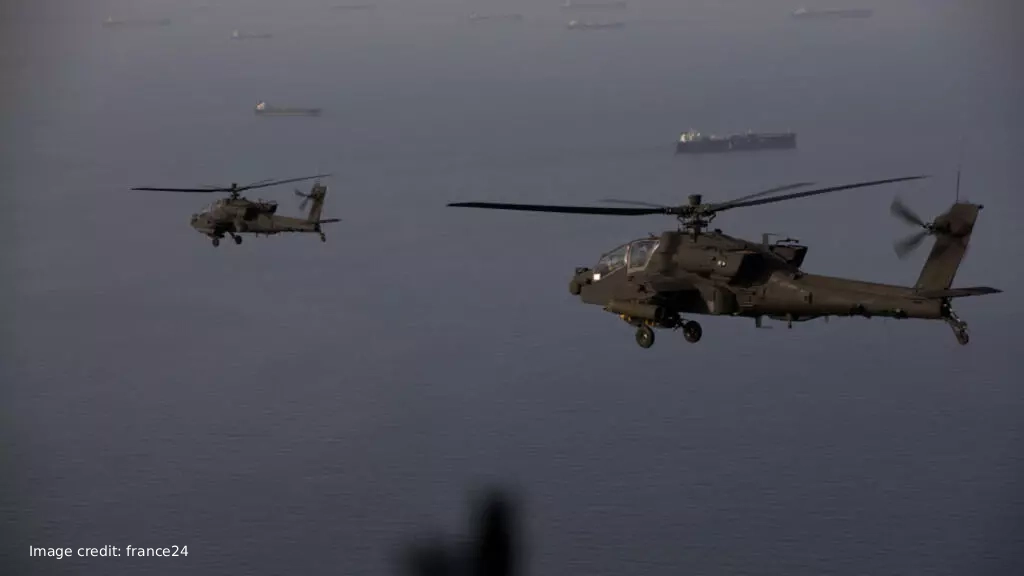
The United States has launched a series of military strikes on Iranian defense and surveillance facilities following the downing of an American Apache helicopter near the Strait of Hormuz. The escalation marks a significant rise in tensions between Washington and Tehran amid ongoing regional instability.
According to the US military’s Central Command (Centcom), the strikes targeted Iranian air defense systems, radar installations and ground control stations located near the strategically important Strait of Hormuz. US officials described the operation as a “proportional response” after an American Apache helicopter was brought down earlier this week during a patrol mission in the Gulf region.
US President Donald Trump confirmed that both crew members aboard the helicopter were rescued safely using an American sea drone. The incident marked the first publicly confirmed rescue operation involving such an unmanned vessel. While US officials stated that the helicopter was struck by an Iranian drone, reports indicate it remains unclear whether the attack was intentional.
In retaliation, Iran’s Islamic Revolutionary Guard Corps (IRGC) claimed responsibility for launching attacks on 21 targets connected to US military bases in the Middle East. Iranian forces reportedly targeted locations in Bahrain and Jordan, while Kuwait confirmed that its defense systems intercepted incoming threats. Local authorities in Bahrain also issued air raid alerts but later stated that attacks had been successfully repelled.
Iran condemned the US strikes, calling them “vicious” and accusing Washington of escalating tensions in the region. Iranian Foreign Minister Abbas Araghchi warned that Iran would not leave any threat unanswered and urged foreign military forces to leave the region to avoid further conflict.
The latest confrontation comes amid broader instability involving Israel, Iran and Lebanon. Israeli forces recently carried out strikes across southern Lebanon, prompting warnings from Tehran that additional military action could trigger another wave of retaliation.
Despite the escalating violence, President Trump suggested that diplomatic negotiations between the US and Iran were still progressing. He stated that both countries were seeking an “immediate ceasefire” and claimed a potential agreement could be reached within days. Trump also indicated that the Strait of Hormuz, a crucial global shipping route, would reopen following any successful peace deal.
The situation remains highly volatile as international leaders monitor developments closely and concerns grow over the possibility of a wider regional conflict.
Most Popular Post
-

September 15, 2026
Exploring Luxury Living in Abu Dhabi: From Reem Island to Wadeem Gardens -

September 4, 2026
The Hidden Costs Of Buying A “Move-In Ready” Home -
-

August 24, 2026
Why Some Realtors Get Busy but Never Get Ahead